

When stress hits in the middle of a packed day, the usual advice—take a long walk, book a massage, or spend an hour meditating—can feel unrealistic. The good news is that stress relief does not have to be time-consuming to be effective. A few minutes of intentional breathing, movement, or grounding can help calm the nervous system, reduce muscle tension, and improve focus. Practices like slow breathing, grounding, and brief muscle relaxation are simple, science-based ways to manage stress in the moment. These quick stress-busting activities can help you reset in five minutes or less.
Start with the simplest tool you always have with you: your breath.
Try box breathing. Inhale for a count of four, hold for four, exhale for four, and hold again for four. Repeat for one to two minutes. If that pattern feels too structured, simply inhale slowly through your nose and exhale a little longer than you inhale. Slowing the breath can lower physical arousal and signal to your body that you are safe. It is one of the fastest ways to interrupt a rising stress response before it takes over your mood or concentration.
2. Another fast option is the 5-4-3-2-1 grounding method.
Pause and notice five things you can see, four things you can feel, three things you can hear, two things you can smell, and one thing you can taste. This technique is especially helpful when stress makes your mind race or spiral. Redirecting your attention to your senses, you shift focus away from anxious thoughts and back to the present moment.
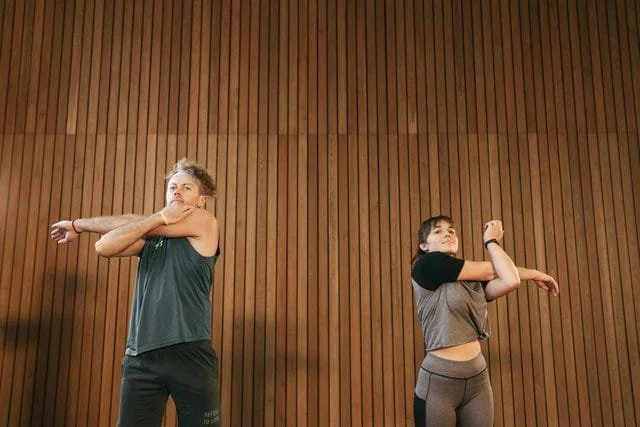
3. If you feel stress building in your body, use movement as a reset.
Stand up, roll your shoulders backward ten times, stretch your arms overhead, and unclench your jaw. Even a brisk two-minute walk down a hallway or around the block can help release tension and break the mental loop of stress. Gentle movement can improve circulation, loosen tight muscles, and give your brain a quick change of scenery. You do not need workout clothes or a full routine—just enough motion to remind your body it is not stuck.
Progressive muscle relaxation is another excellent choice when you are physically tense.
Starting with your hands, squeeze for five seconds and then release. Move to your shoulders, face, stomach, or legs—any area holding tension. The contrast between tightening and releasing helps you notice where stress is living in your body. If you prefer an even easier version, simply drop your shoulders, soften your forehead, and let your hands rest open instead of clenched. Small physical cues can create a surprisingly large sense of relief.
4. For a mental reset, try a one-song mindfulness break.

Put on a calming or familiar song and give it your full attention until it ends. Notice the lyrics, rhythm, and instruments instead of multitasking. It can help quiet mental clutter and create a boundary between one stressful task and the next. If music is not an option, look out a window for sixty seconds and focus on one detail—the movement of leaves, the shape of clouds, or the pattern of light on a building. A short pause in attention can restore more clarity than pushing through nonstop.
5. You can also use a quick gratitude or “small win” check-in.
Take one minute to write down three things that went well today, even if they seem minor: you answered a difficult email, drank water, or made it to an appointment on time. This shifts attention from pressure to progress and can help restore a sense of control.
Choose two or three activities that fit naturally into your day—before opening your inbox, after a meeting, or while waiting for coffee. In busy seasons, tiny resets are not trivial. They are a practical way to protect your energy, steady your mind, and keep stress from running the whole day.
If you would like to know more about Mindfulness-Based Stress Reduction (MSBR), please visit my stress reduction specialty page.